
Criminal Court Cases in Union County
Union Circuit Court is the felony trial court. Union District Court decides misdemeanors, violations, and traffic matters, and it handles the first phase of a felony case. That early phase can include arraignment and a probable-cause hearing before a felony is bound over or presented for indictment. Union County belongs to Kentucky's 5th Judicial Circuit and 5th Judicial District. A case number often includes a year, a type code such as CR for Circuit Criminal or M for misdemeanor, and a sequence. The clerk should confirm the exact number.
Kentucky has a unified judiciary, so the Union Circuit Court Clerk keeps both District and Circuit case files. The separately elected county clerk does not hold these trial-court dockets. The official Union court information page identifies Jo Sheridan as circuit clerk and publishes the court contacts, schedules, access notes, and current locations. It is the first local source to check before a trip.
The official court source shows the local locations that matter for a Union County court case lookup:
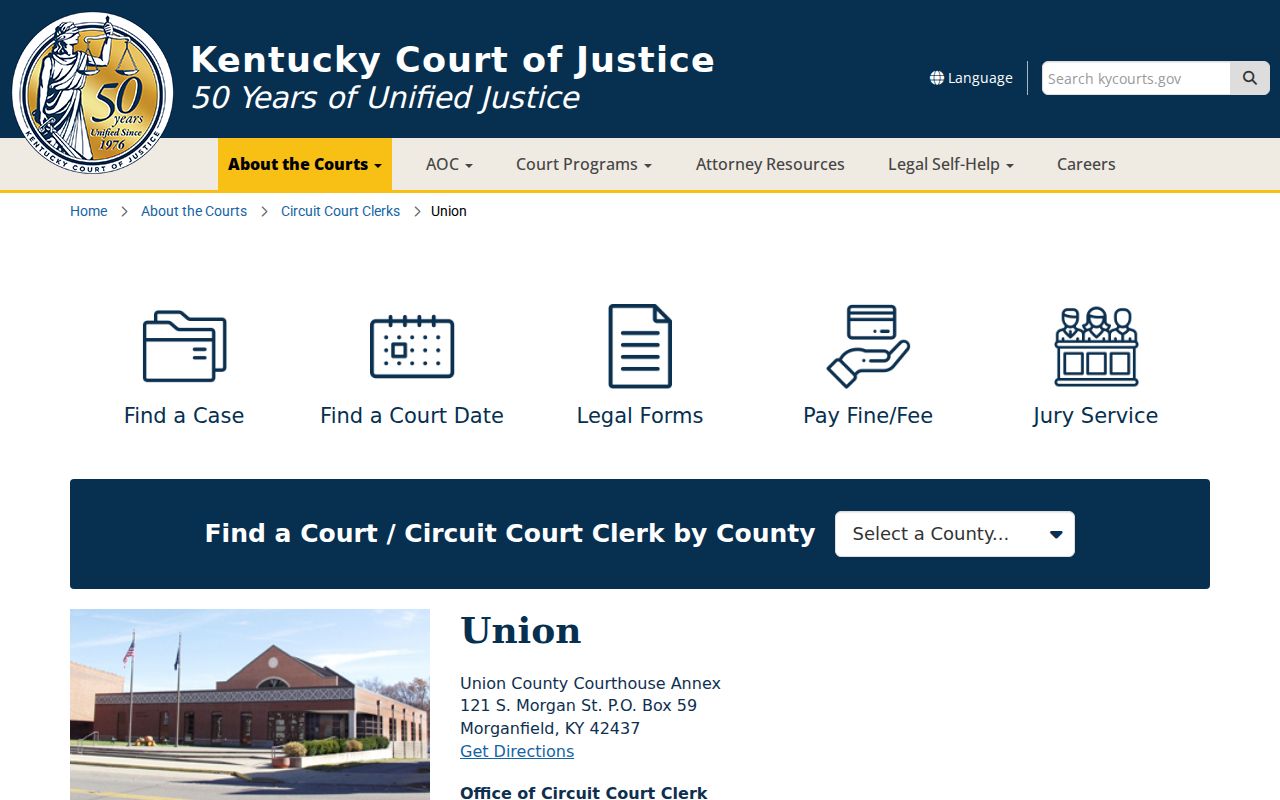
The image helps separate the records counter from the place where a hearing may occur.
Union Court Records Use Two Buildings
A common local mistake is going to the historic courthouse photo rather than the clerk's counter. County government and the sheriff are at 100 West Main Street. The Circuit Court Clerk's records office is in the Courthouse Annex at 121 South Morgan Street, Morganfield, Kentucky 42437. The clerk's published hours are weekdays from 8 a.m. to 4 p.m. Central. Call 270-389-1811 for Circuit matters or 270-389-0800 for District matters. The published fax is 270-389-1003, though staff should confirm whether a specific request may be sent that way.
Current courtroom and calendar information must also be checked. The research identifies court proceedings at the Morganfield City Hall Council Chamber, 100 South Spring Street, while the clerk remains at the Annex. Parking and step-free access are advertised at the office complex. Kentucky Court of Justice also provides language-access and ADA channels. Calling first avoids a wasted visit and lets staff explain security rules, device limits, or accommodation steps that are not published on the Union page.
Union County Case Record Searches
The Kentucky Court of Justice public gateway provides Find a Case and Find a Court Date functions. Public access may expose fewer party details than an authorized CourtNet account. Courthouse terminals and the clerk therefore remain vital. Start with a case number when one is known. Otherwise use a name, select Union County, and narrow the date or case category. Confirm identity through the case context rather than assuming a name match is the right person.
- Open the Kentucky public gateway and choose Find a Case or Find a Court Date.
- Select Union County, then enter the party name or exact case number.
- Narrow the result by date range and criminal or traffic category where those controls appear.
- Read the court division, status, charge, event dates, and disposition as separate fields.
- Call or visit Jo Sheridan's office for copies, certification, signed orders, or a file that is not online.
The successful manifest capture comes from the same state public court gateway used for Union County searches:
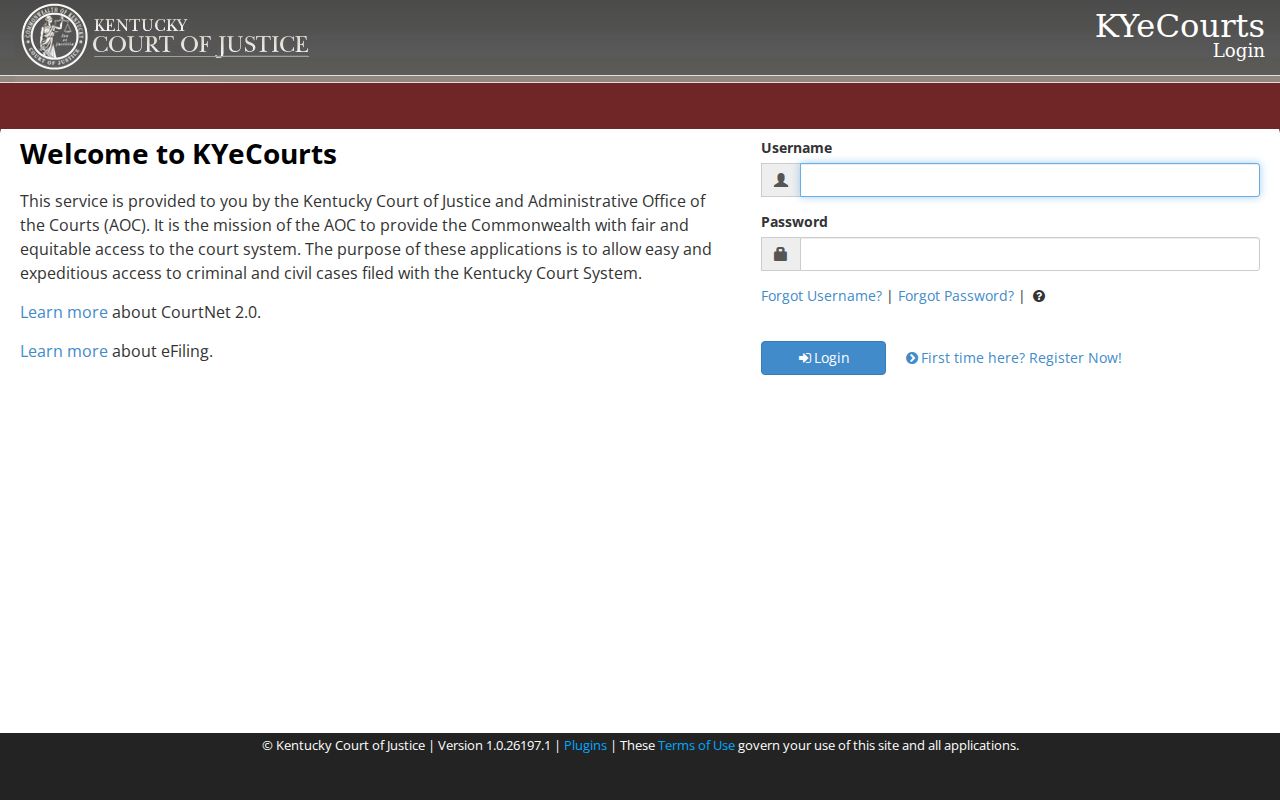
Its options help locate the index entry, while the Union clerk supplies the official local document.
| Field | Control | Use | Search note |
|---|---|---|---|
| County | Dropdown | Contextual | Select Union |
| Party or name | Text | Contextual | Availability can vary by access view |
| Case number | Text | Optional | Best discriminator when known |
| Date or range | Date | Optional | Narrows calendar results |
| Case category | Filter | Optional | Use criminal or traffic when exposed |
| Search or reset | Button | Search executes | Run or clear the query |
Requesting Union Criminal Case Files
Jo Sheridan's office is the authoritative route for pleadings, docket sheets, judgments, sentences, and certified copies. Give the case number if possible. If it is unknown, provide the party name, approximate filing year, court level, and case type. Ask for the exact item that answers the question, such as the final judgment or dismissal order, instead of requesting every paper in the file. The clerk can explain what is public and how copies can be provided. No Union-specific court-copy fee was verified in the research, so ask for the current cost before ordering.
Union Circuit Court Clerk
121 S. Morgan St.
Morganfield, KY 42437
Circuit: 270-389-1811
District: 270-389-0800
Fax: 270-389-1003
Weekdays, 8 a.m.-4 p.m. Central
For a statewide court compilation, AOC FastCheck and One-Time Request are separate channels. A report costs $25 and covers Kentucky felony cases back to 1978 plus at least five years of misdemeanor and traffic cases. It excludes federal cases and confidential juvenile, mental-health, and domestic-violence case types. That compilation is useful for self-review, but it does not replace the complete Union County case file.
What a Criminal Case File Contains
A Union County case file can show much more than a name and charge. The docket records each public event in sequence. Charging papers explain what was alleged. A judgment states the court's outcome, and a sentence records the terms imposed after a conviction. Bond, counsel appearances, hearings, costs, and later revocation events may also appear. Documents are not always scanned for public download, even when the docket entry is visible.
| Case Number & Court | Identifies Union County, the District or Circuit division, case type, filing year, and sequence. |
|---|---|
| Charging Document | Shows the filed allegation, charge text, and KRS citation when entered. |
| Docket Entries | Lists complaints, pleas, motions, hearings, warrants, orders, and later activity. |
| Hearing Dates | Provides scheduled date, time, location, and judge where public. |
| Disposition & Judgment | Records conviction, dismissal, diversion, acquittal, or another final status. |
| Sentence & Conditions | May show custody, probation, costs, fines, and revocation terms. |
Read charge and outcome together. A charge can be amended, dismissed, merged, or replaced. “Disposed” means the court completed that stage or case; it does not by itself mean conviction. FTA means failure to appear, while FTV means failure to comply or failure to verify in the applicable docket context. Ask the clerk when a short code is unclear.
Older Union Criminal Case Records
An older Union County case may not be sitting at the Annex counter. Kentucky's official court page warns that file type and age control whether a file stays with the clerk, moves to a record facility, or is destroyed under a judicial retention schedule. “Not at the counter” is not the same as “no case.” Give the clerk enough detail to check the index. If a public file is stored off-site, staff can provide the case number and file-locator number needed to retrieve it.
This route matters for genealogy, personal record review, and a mismatch between an online entry and a paper judgment. Older files may predate current digital coverage, and docket scans may be incomplete. Keep the requested year broad enough to account for a filing that followed the event. If the clerk confirms lawful destruction, note that result rather than drawing an unsupported conclusion from an empty CourtNet search.
Criminal Case Stages in Union County
A Union felony begins in District Court for early proceedings, then moves to Circuit Court if it is bound over and indicted. A misdemeanor normally remains in District Court. Dates vary by case, so the research does not support a fixed Union timetable. The docket should be read as a chain of events, with each entry tied to its court level and date.
Case flow: Charges Filed › Arraignment › Pretrial › Plea or Trial › Disposition › Sentencing
Booking charges can change before indictment. The prosecutor may amend a count, the grand jury may return a different charge, or a court may dismiss it. The final signed judgment carries more weight than the intake description. For the arrest and custody layer that comes before the court file, the county's arrest search process explains the separate agency and jail channels.
FastCheck Is Not a Union Case File
AOC FastCheck is a statewide judicial compilation. It draws from CourtNet and provides published coverage across all Kentucky counties. A registered user receives downloadable results for a limited period, while a One-Time Request returns one report by mail and does not provide online status tracking. Neither product supplies every pleading or signed page in a Union County prosecution. Use the report to find a county, case number, charge, and disposition, then request the key source paper from the clerk.
The distinction is also important when correcting an error. AOC directs report questions to its Records Unit at 800-928-6381, but some corrections must begin with the circuit clerk in the filing county. Preserve the report that looks wrong. Mark the exact field, obtain the judgment or order, and contact the source office. Correcting the underlying Union County entry is more useful than relying on a later summary that repeats it.
Access Rules for Case Records
Public access does not make every item open. Juvenile proceedings, sealed and expunged matters, mental-health cases, confidential domestic-violence matters, grand-jury material, protected victim data, and certain identifiers can be withheld or redacted. Online views may show less than a public paper file. The clerk applies court-record rules under judicial authority, which is distinct from treating a case file as an executive-agency request under the Kentucky Open Records Act.
If a Union County court case does not appear online, ask the clerk whether the issue is access level, spelling, case type, age, off-site storage, sealing, or retention. Do not reconstruct an expunged case from stale copies. A person reviewing an eligible record can use Kentucky's expungement process, but certification alone does not clear the file. The court must grant the relief.
The Kentucky Court of Justice expungement page illustrates the certification and filing route:
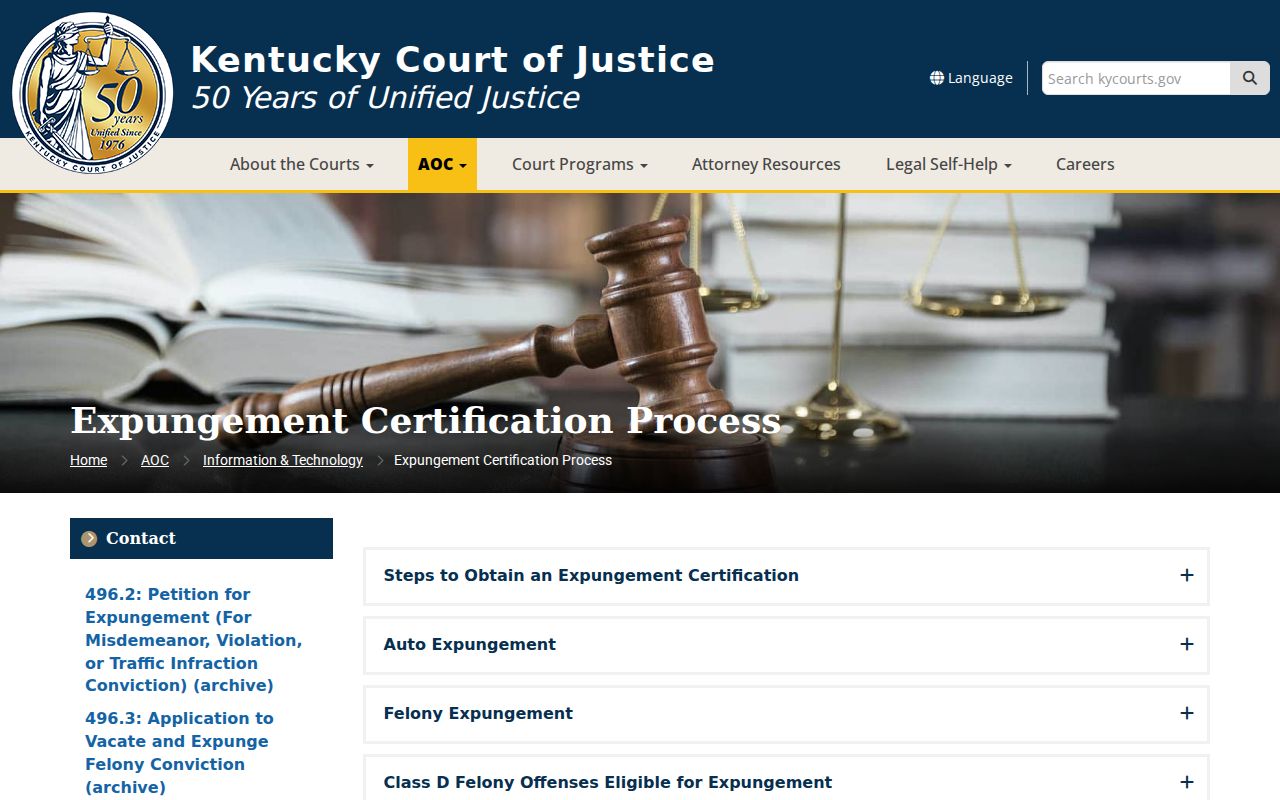
Union filings then go to the clerk in the county of the original charge.
Union Case Expungement Sources
Kentucky uses expungement, including “vacate and expunge” for an eligible felony. KRS 431.073 addresses eligible felony convictions, KRS 431.076 covers qualifying acquittals, dismissals, and felony charges not resulting in indictment, and KRS 431.078 covers eligible misdemeanor, violation, traffic-infraction, and amended or dismissed matters. The correct route depends on the disposition and date. The eligibility certification costs $40 and expires after 30 days, so timing matters.
The official Kentucky expungement statutes are another successful manifest source:
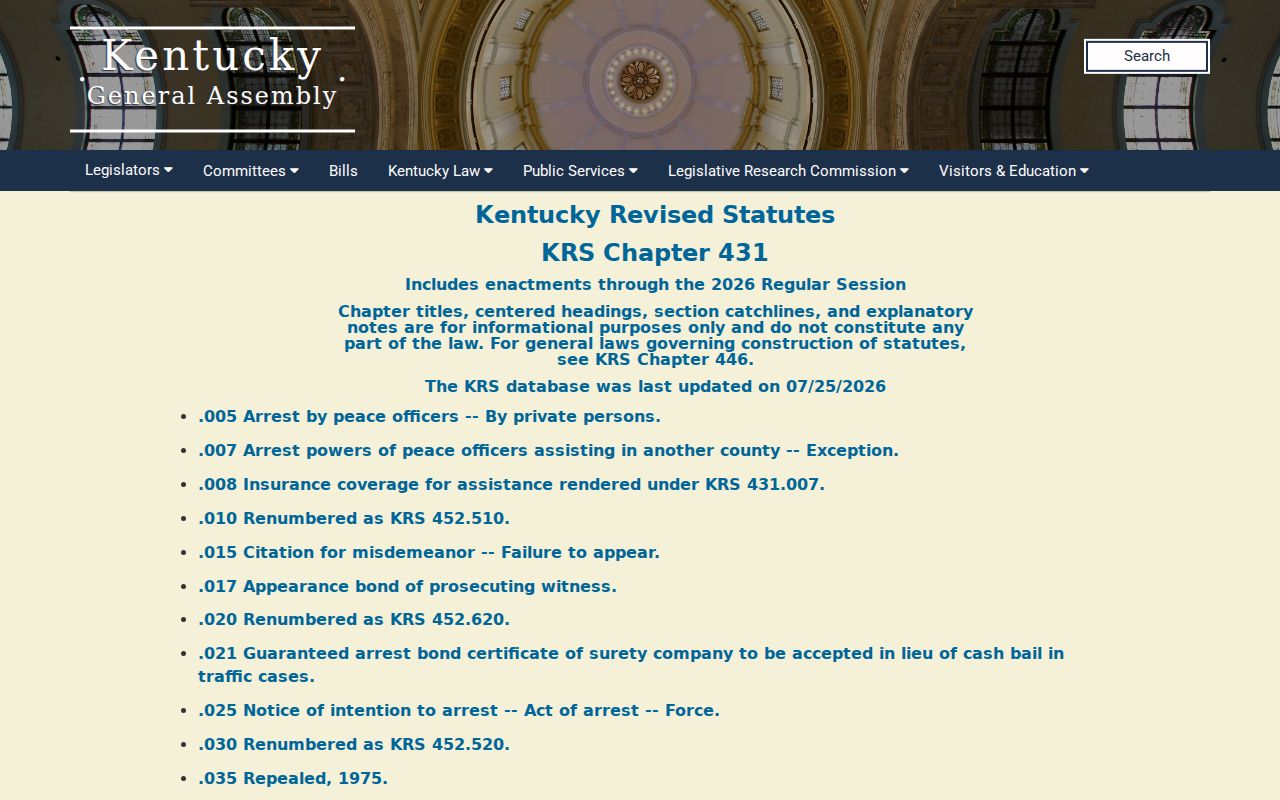
That source should be checked with the current court forms before a petition is filed at the Union clerk's office.
For many eligible Class D felony convictions, the research states a five-year wait after sentence completion or successful probation or parole, whichever is later. The felony process has a $50 nonrefundable filing payment and $250 more if relief is granted, apart from certification. Those rules do not apply to every case. Confirm eligibility and use the current AOC petition rather than treating an online disappearance as legal expungement.